
Are you wondering about the difference between a head spa and a hair spa? This is a question many professionals ask themselves before structuring their treatment offerings. These two services – often grouped under the term hair spa – target the same body area but pursue radically distinct objectives. Understanding this nuance means mastering the head spa vs. hair spa difference that changes everything about your commercial positioning and customer advice.
Head Spa or Hair Spa: Two Treatment Philosophies
The distinction between a head spa and a hair spa is based on a simple logic: the first treats the source, the second enhances appearance. One acts on the scalp, the other on the hair fiber. Mastering this difference allows you to build a coherent offering and advise each client with precision.

Head Spa: A Protocol Focused on the Scalp
A head spa session primarily focuses on scalp health. This head spa ritual, inspired by Japanese traditions, combines meticulous cranial massage and gentle exfoliation to stimulate blood circulation and deeply purify. The client receives a targeted treatment for the roots.
The massage, with its circular movements and shiatsu pressures, activates microcirculation to stimulate hair follicles. Gentle exfoliation removes excess sebum, product residue, and accumulated impurities. Improved blood flow creates more favorable conditions for healthy growth in the long term. Working on the neck and temple muscles, combined with aromatherapy, reduces tension and promotes deep relaxation.
It's not just a massage: it's a complete protocol that acts directly at the source of hair health. The effects accumulate session after session.
Hair Spa: A Treatment Dedicated to the Hair Fiber
The hair spa operates on a different logic: it focuses on the lengths and ends after shampooing. The hair benefits from deep hydration thanks to a rich mask, serums, and the use of steam. The result is immediately visible, making it a particularly suitable service for clients seeking a quick aesthetic effect.
Professional masks restore lost hydration, ideal after chemical coloration or thermal treatments. Silk proteins and oils restore elasticity to damaged, brittle, or dull hair. Serums fill the cuticular scales for a visible shine effect from the first session, and hair becomes softer, reducing frizz and tangles daily.
Unlike the head spa, which works long-term, the hair spa produces an immediate aesthetic result that lasts several weeks with a good at-home maintenance routine.
Two Complementary Treatments, A More Comprehensive Offer
Offering both treatments in parallel creates a real synergy: a healthy scalp optimizes the absorption of active ingredients provided by the hair spa. Commercially, combining the two into a protocol increases the average basket and meets a wider range of needs. To choose the right equipment for your setup, compare the entire Sakura range.
Looking to structure a combined head spa + hair spa offering?
Book a free discovery appointment — we'll analyze your project and positioning together.
How Each Treatment Unfolds in the Salon
Each treatment follows a specific protocol, with its own intentions and gestures. Here's what your clients will concretely experience — and what you'll need to be able to offer them.

Japanese Head Spa Protocol
This ritual begins with a precise scalp diagnosis, followed by gentle exfoliation to eliminate impurities. Targeted massage techniques then work on each area — from the vertex to the nape — with precious oils like camellia or tsubaki. Aromatherapy complements the protocol for a complete sensory immersion. To learn more about the fundamentals of this ritual, consult our guide: What is a Japanese head spa?.
For the client: deep relaxation, sometimes close to a meditative state. For you: a premium service with high perceived value, generating loyalty and word-of-mouth.
Running a Professional Hair Spa Session
The session begins with an analysis of the hair's condition. A nourishing pre-shampoo prepares the fiber, followed by a gentle wash. The highlight: the application of the restorative mask, left on under steam to maximize the penetration of active ingredients into the fiber. Fumigation plays a central role here — it opens the cuticle and multiplies the effectiveness of rich products applied to the lengths and ends. The session ends with a careful rinse and a blow-dry to seal the cuticles.
Immediate and visible results, particularly suitable for clients sensitive to quick aesthetic effects.
Equipment and Duration: Key Differences
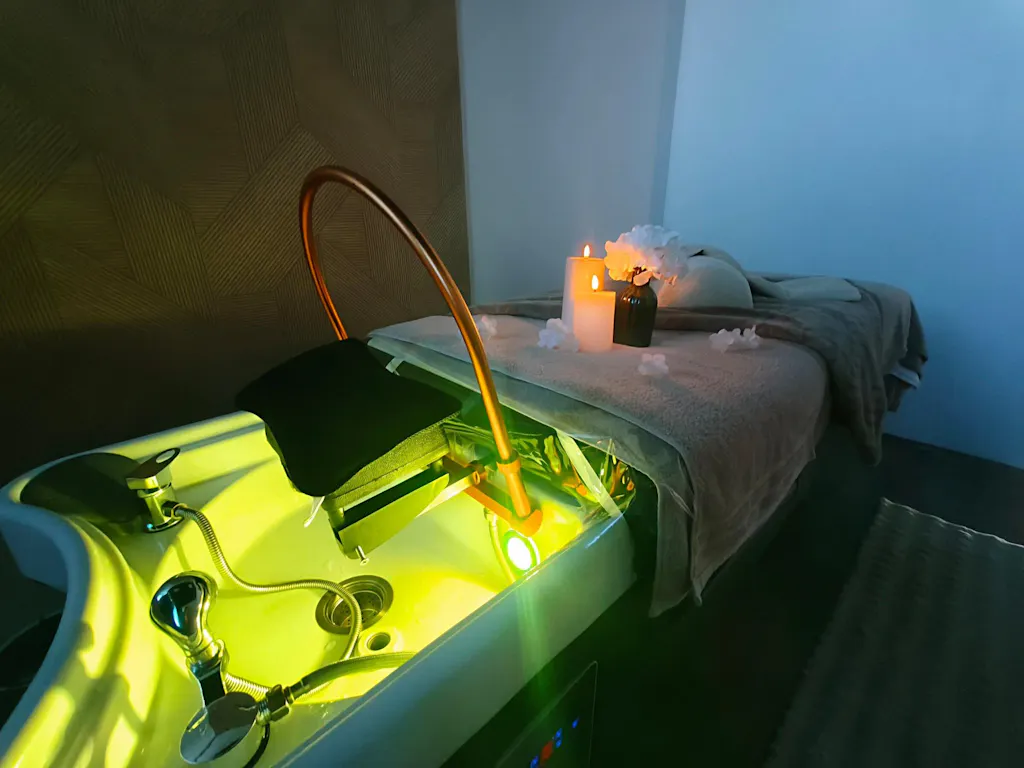
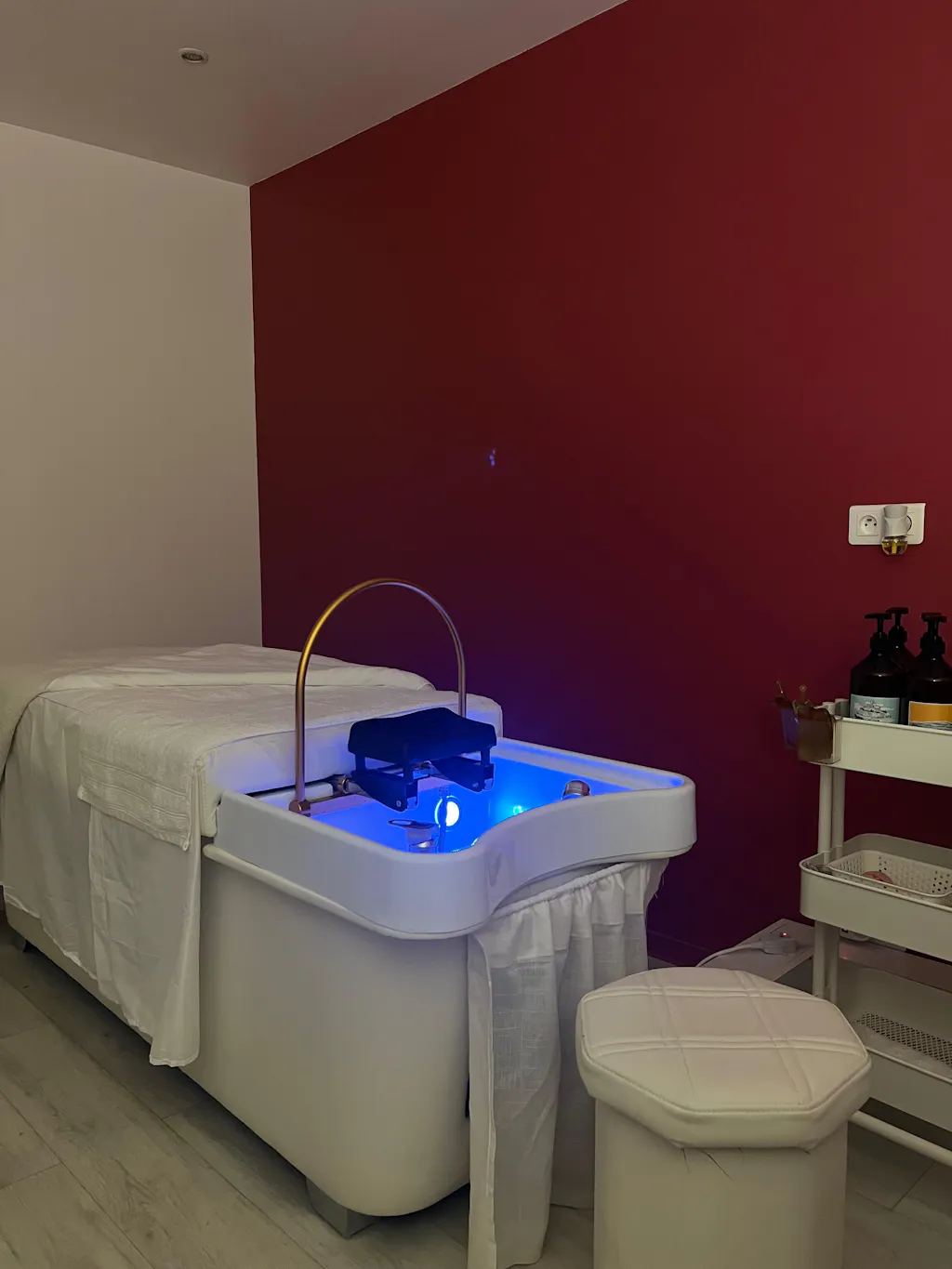
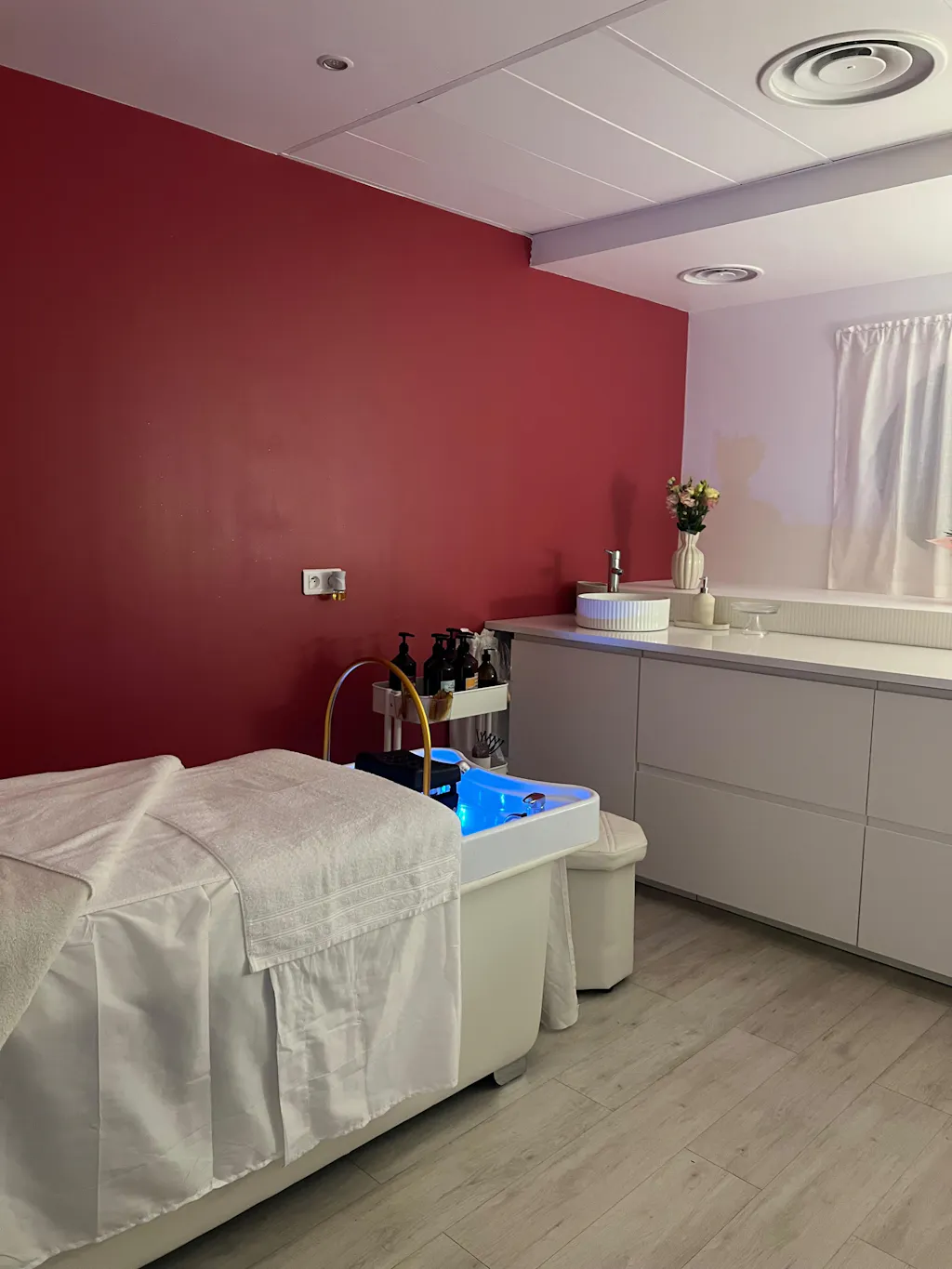
Both treatments use the same professional equipment — a head spa table or basin depending on your setup — and last for a comparable duration of 45 to 90 minutes, at the same price. The intention of the protocol is where all the difference lies.
| Criterion | Head Spa | Hair Spa |
|---|---|---|
| Average Duration | 45-90 minutes | 45-90 minutes |
| Priority Area | Scalp | Lengths and ends |
| Equipment | Professional head spa table or basin | Professional head spa table or basin |
| Core Protocol | Deep massage, circulation activation | Concentrated products + steaming |
| Key Products | Camellia, tsubaki oils, essences | Protein masks, concentrated serums |
| Average Price | €80-130 per session | €80-130 per session |
| Primary Objective | Scalp health, well-being | Fiber repair and nutrition |
Looking to offer these two treatments in your salon?
Discover our range of professional equipment — table or basin, with or without plumbing, for every salon configuration.
Which Treatment to Recommend Based on Your Client's Profile
The right advice depends on your client's specific issue. Fragile scalp or damaged hair? Here's how to guide your diagnosis.
When to Recommend a Head Spa
The Japanese head spa is particularly indicated when the scalp shows signs of imbalance. Discover the 7 documented benefits of the Japanese head spa to refine your arguments.
Persistent dandruff responds well to deep cleansing that regulates sebum and provides lasting soothing. Chronic itching gradually reduces thanks to improved circulation and scalp appeasement. For clients reporting hair loss, follicle stimulation creates more favorable long-term conditions. Finally, cranial tension and accumulated stress are directly addressed by the massage protocol — with positive effects often reported on sleep quality.
When to Recommend a Hair Spa
The hair spa is suitable for clients whose damaged hair has suffered repeated aggressions: intensive coloring, excessive heat, dehydration. If your client is looking for a visibly quick result on their lengths, this is the most appropriate answer. Dry and dull hair regains shine and suppleness after an intensive hydration session under steam. Fragile fiber benefits from restorative masks, and damaged ends are consolidated to prevent breakage and facilitate daily styling.
Compared Profitability: What It Means for Your Business
Head spa and hair spa generate comparable revenue: a session costs between €80 and €130 for 45 to 90 minutes, regardless of the chosen protocol. With just 3 weekly sessions, you can generate €1,000 to €1,500 monthly from a single piece of equipment.
The real difference is not in the price, but in the client profile you attract: the head spa appeals to those seeking deep relaxation and long-term scalp health; the hair spa caters to those who want quick visible aesthetic results on their lengths and ends.
Offering both in a combined protocol — head spa for the scalp, hair spa for the lengths — allows you to charge for a comprehensive service between €120 and €180, while addressing all hair care needs in a single visit. This is the most profitable offering structure per slot. Our guide on professional head spa machines details the technical criteria to check before investing.
Regulations: What You Need to Know Before You Start
In France, hairdressing is a regulated activity: as soon as a service involves hairdressing acts — shampooing, fiber work, application of professional products — it must be carried out in compliance with current regulations. The term "hair spa" is not an official legal category, and the exact scope depends on the acts performed.
If in doubt about what you are authorized to offer based on your qualifications and status, refer to the official DGCCRF FAQ on the regulation of aesthetic and hairdressing care or contact your Chambre de Métiers et de l'Artisanat (CMA).
For head spa, the acts performed (massage, application of treatments without chemical acts) may fall under different frameworks depending on your profile.
In all cases, appropriate training is essential — not only for the quality of the treatment but also for your credibility with your clientele. We do not provide training directly, but we can direct you to certified Qualiopi partner organizations, whose programs can be financed via FAFCEA or OPCO depending on your status.
EXPRESS FAQ
What exactly is a head spa?
The head spa is a Japanese-origin treatment focused on the scalp. It combines precise cranial massage, gentle exfoliation, and the application of nourishing oils (camellia, tsubaki for example) over 45 to 90 minutes. Its effects: scalp purification, stress reduction, improved circulation, and, in the long term, creation of favorable conditions for healthier growth.
What is the difference between a head massage and a head spa?
A classic massage primarily aims for muscle relaxation. A head spa is a comprehensive protocol that integrates exfoliation, specific products, and dedicated equipment, with a dual objective: well-being and scalp health. The duration, sequence, and results are incomparable to a few-minute massage in a salon.
How many sessions does it take to see head spa results?
Relaxation is noticeable from the first session. Lasting results — sebum regulation, dandruff reduction, better sleep — generally appear after 3 to 4 sessions spaced 6 to 8 weeks apart. This regular rhythm naturally builds customer loyalty.
Is specific equipment needed to offer head spa and hair spa services?
Yes. Both treatments use the same professional equipment — a dedicated head spa table or basin. It is this investment in professional head spa equipment that determines the quality of the experience for both services and justifies a price point between €80 and €130.
Can both treatments be offered in the same salon?
Yes, and it is a recommended strategy. Head spa and hair spa are complementary: the first acts on the scalp, the second on the lengths. A combined protocol is priced between €120 and €180, increases the average basket, and meets all hair needs in a single visit. Contact us to structure your offering.
What frequency should you recommend to your clients?
For head spa: every 6 to 8 weeks for regular maintenance, or every 4 to 6 weeks for clients with marked scalp issues. For hair spa: depending on the hair condition, from once a month to once every 2 months. Offering a subscription or a package of 3 sessions encourages engagement and secures your schedule.