
The Japanese head spa is experiencing a global craze today — specialized salons, viral videos, new services in institutes. But behind this single term, two very different realities coexist: the original ritual as it has been practiced in Japan for decades, and the modernized versions found today in professional salons in Europe.
These two forms are not in opposition – they respond to different contexts. Understanding this distinction allows you to better position your offer, better explain your service to your clients, and choose equipment consistent with the protocol you wish to provide. For a general overview of the ritual, see our article what is a head spa.
The origins of the Japanese head spa: a ritual rooted in a culture of care
In Japan, scalp care is an ancient practice, integrated into the wellness culture long before the term "head spa" existed. In Japanese hair salons — biyo-shitsu — shampooing is not a utilitarian gesture but a moment of comprehensive care, accompanied by a structured, precise, and often prolonged scalp massage.
The Japanese spa in its traditional form rests on three pillars: manual techniques — pressure and kneading techniques inherited from codified massage practices —, the relationship to the product — oils, essences, treatments chosen according to the scalp diagnosis —, and the relationship to time — a session that is not rushed, that takes the time it needs.
This ritual is performed by specialists specifically trained in these techniques, often in dedicated establishments where the entire space is designed for sensory immersion. The equipment is simple: an ergonomic basin, a comfortable chair, carefully selected products. Technology is secondary — the hand performs the treatment.
The modernized version: technology serving the experience
The spread of the Japanese head spa outside Japan — first to the United States, then to Europe — has been accompanied by an evolution of the ritual. Not a betrayal of the original, but an adaptation to different professional contexts: multi-service salons, busy schedules, clients discovering the treatment for the first time and needing immediate sensory cues.
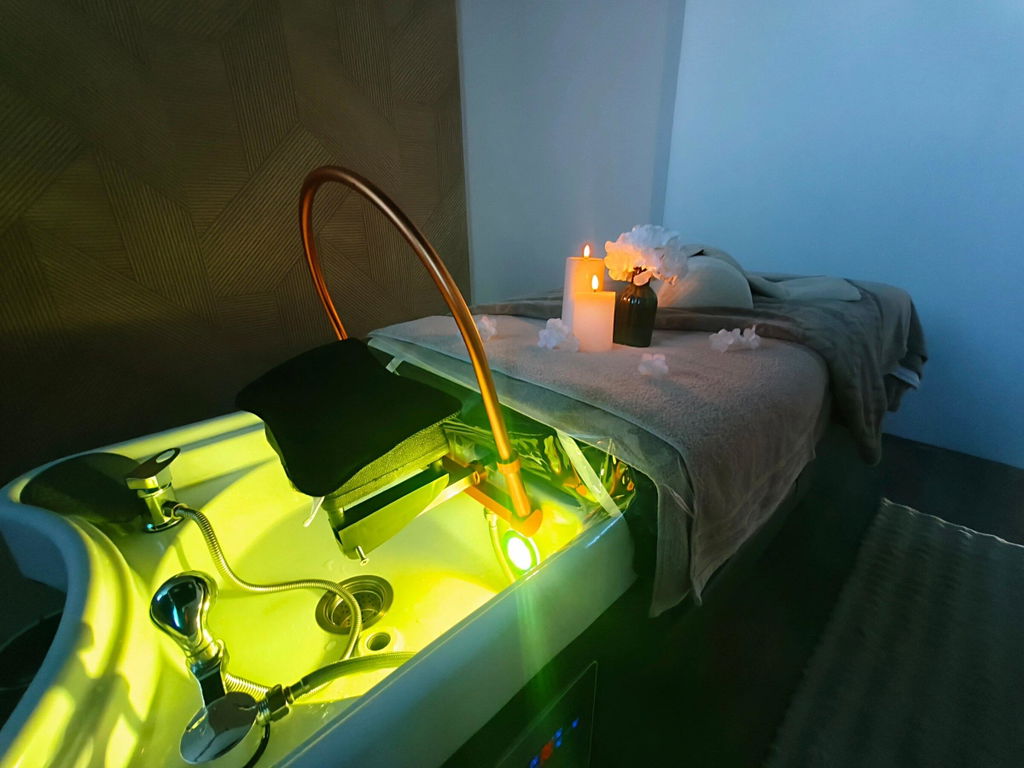
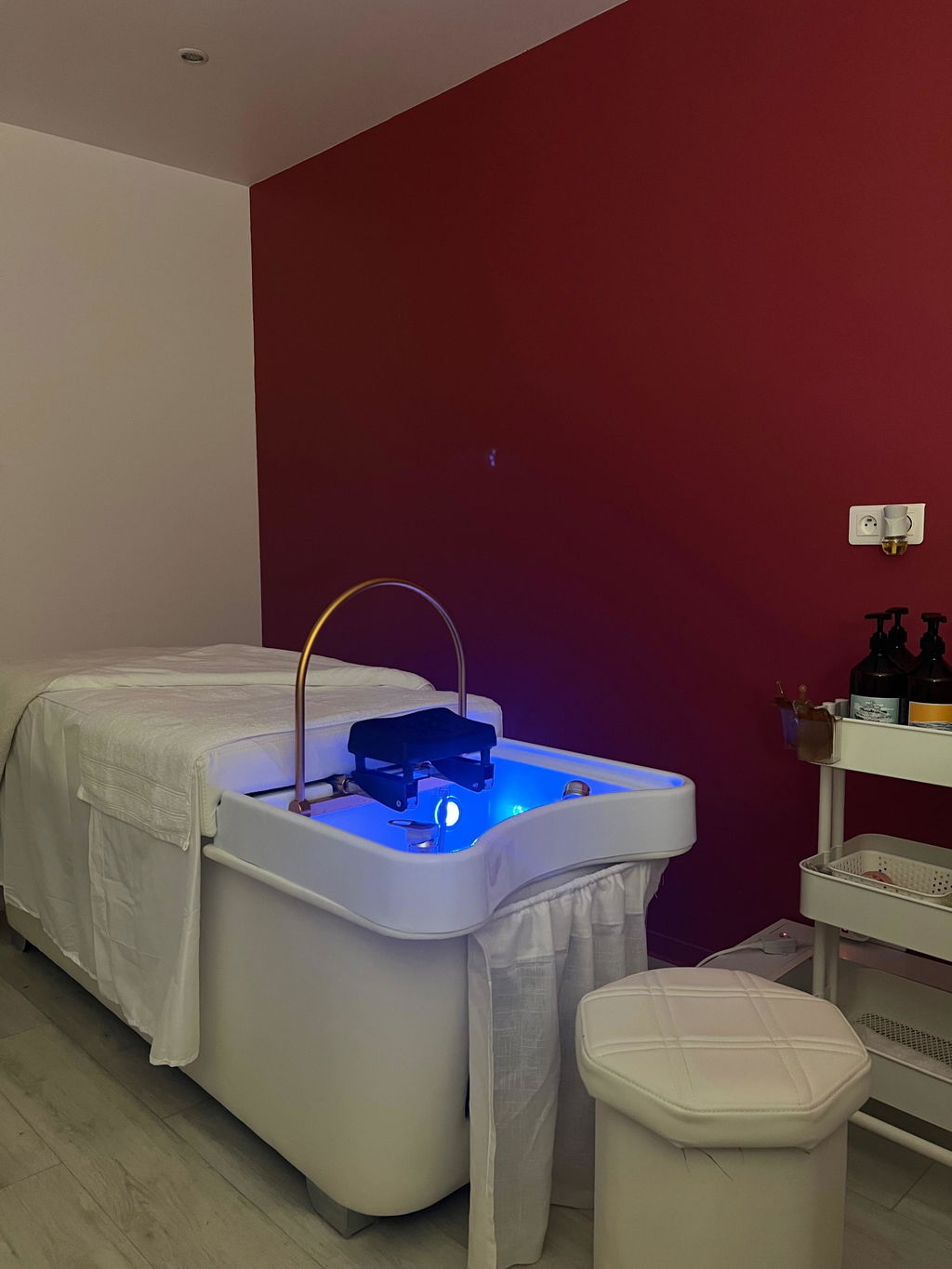
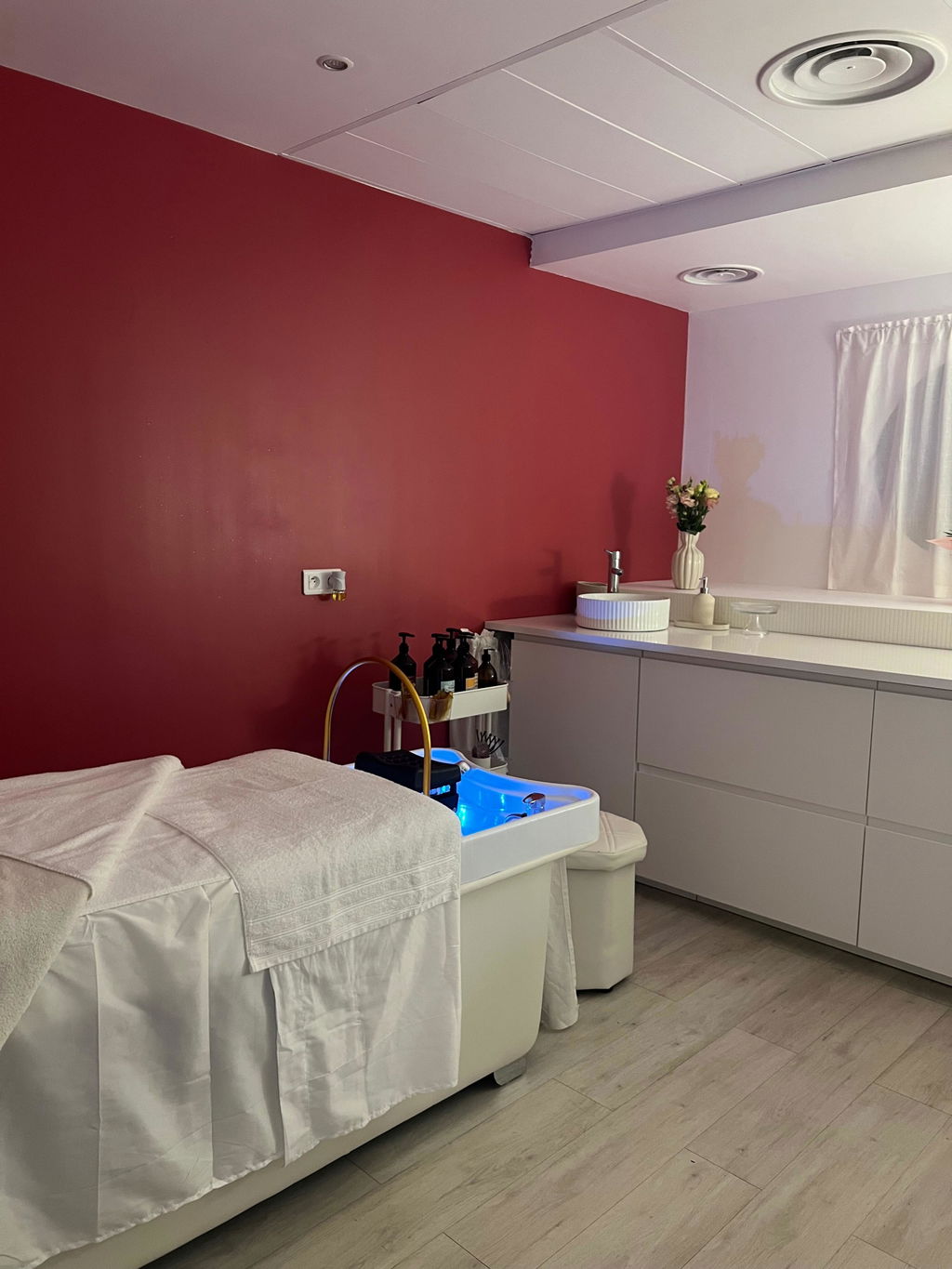
It is in this context that professional head spa equipment as we know it today appeared: ergonomic basin with integrated light therapy, steam system, chromotherapy, adjustable water jets. These features do not replace the manual gestures — they complement and enrich them.
Modernization has also addressed a practical constraint: in a European salon, a practitioner cannot dedicate 90 minutes to each client six days a week without physical exhaustion. Professional equipment has made it possible to structure reproducible protocols, with consistent quality from one session to another. To compare available models, consult the comparison of the Sakura range.
At Sakura Head Spa, our range of Japanese head spa equipment is designed to enable trained professionals to offer a ritual faithful to the original spirit, with tools adapted for intensive salon use. Discover our range of equipment.
Comparison: traditional vs. modern, point by point
| Dimension | Traditional Japanese Head Spa | Modernized Version (Professional Salon) |
|---|---|---|
| Technique | 100% manual, codified techniques | Manual + equipment assistance (steam, jets) |
| Equipment | Simple, ergonomic basin and chair | Japanese head spa basin with light therapy, steam, chromotherapy |
| Typical Duration | 60 to 90 minutes | 45 to 75 minutes depending on the protocol |
| Training Required | Long, specialized, often in Japan | Qualiopi certified training, feasible in a few days |
| Practice Context | Dedicated establishments in Japan | Hair salon, institute, wellness area |
| Sensory Experience | Immersion through gestures and products | Multi-sensory immersion (light, steam, touch) |
| Accessibility in Europe | Rare, specialized establishments only | Rapidly developing in trained salons |
What remains unchanged: the spirit of the ritual
Regardless of the version — traditional or modernized — the Japanese head spa is based on fundamental principles that do not vary. Scalp diagnosis before treatment. Individual attention to each client. The deliberate slowness of gestures. The fact that this treatment is not an improved shampoo — it is a service in its own right, with its own protocol, its own duration, its own price.
These are the fundamentals that the best training courses transmit. And this is what distinguishes a well-executed head spa — whether traditional or modernized — from a service that bears the name without having the substance.
The benefits of head massage at the heart of the ritual — deep relaxation, attention to the scalp, a moment of disconnection — are the same in both versions. It is the tool that changes, not the intention.
What this means for your salon
If you wish to integrate the Japanese head spa into your offerings, the question is not "traditional or modern" — it is: what level of investment in training and equipment corresponds to your positioning and your clientele?
A salon that positions itself on high-end wellness, with a dedicated cabin and clients willing to invest in a 75 to 90-minute session, can aim for a version very close to the original ritual — long manual gestures, premium products, little technological equipment.
A hair salon that wishes to add a head spa service to its existing menu, with 45 to 60-minute slots and clients to retain, will benefit more from professional structuring equipment — Japanese head spa basin with light therapy and steam, reproducible protocol, Qualiopi certified training. Our complete guide on professional head spa machines details the criteria to check before investing.
Both approaches are legitimate. What is not legitimate is to offer a "head spa" without training or a real protocol — regardless of the chosen version. The Japanese spa is a ritual that is learned and transmitted. Equipment alone does not make the treatment.
Would you like to define the head spa positioning suitable for your salon?
Our team provides free support: analysis of your current offer, training and equipment recommendations, launch strategy. A 30-minute exchange to make the right decisions.
Book your free discovery appointment
Express FAQ
What is the difference between a traditional and modern Japanese head spa?
The traditional Japanese head spa relies on 100% manual techniques, in dedicated establishments in Japan. The modernized version retains the spirit of the ritual but incorporates professional equipment — steam, light therapy, structured protocol — adapted for intensive salon use. Both forms share the same fundamentals: diagnosis, slowness, individual attention.
Can a Japanese head spa be performed without specialized equipment?
In its traditional form, yes — manual gestures are central. Equipment enriches the experience and structures the protocol, but does not replace it. In both cases, serious training remains essential.
How do I choose between a traditional or modernized positioning?
This depends on your available slot, space, and clientele. Long sessions in a dedicated cabin → approach close to traditional. Multi-service salon with 45 to 60-minute slots → Japanese head spa basin with structured protocol, Qualiopi certified training. Certified training remains the prerequisite in both cases.
Is the modernized head spa faithful to the original?
In spirit, yes. What can betray the original ritual is not the equipment — it is the lack of real training and protocol. A well-executed Japanese spa with modern equipment remains faithful to the essence.
Where can I get trained in Japanese head spa in France?
Sakura Head Spa does not provide training directly. We refer to Qualiopi certified organizations specializing in Japanese head spa. To learn more about the selection criteria for training, consult our guide on certified head spa training.