
Head spa is a booming service in the professional wellness sector in France today. Yet, from one salon to another, prices vary threefold for a technically comparable treatment. It's not just a matter of equipment: positioning relies on consistency between equipment, protocol, environment, and the quality of the support provided.
Positioning the Japanese head spa as a premium service is not something that can be improvised—but it's not something that can be invented either. It relies on concrete decisions made even before the first client lies down. This guide gives you the levers.
What "premium" means in practice
Premium doesn't mean expensive. It means that the perceived value justifies the price asked—and that the client leaves feeling that they have experienced something they can't find elsewhere.
In the context of the Japanese head spa, perceived value is based on four dimensions:
- Expertise: the practitioner knows what they're doing, why they're doing it, and can explain it.
- Environment: the space exudes special care, an intention visible in every detail.
- Protocol: each session follows a precise, reproducible, recognizable structure.
- Sensory experience: what the client experiences is unlike anything else in their daily life.
These four dimensions can all be worked on. None are reserved for large establishments.
Pricing: setting the right price from the start
The most common mistake is to start with a low price "to attract the first clients," with the intention of raising it later. In practice, this strategy produces the opposite effect: it anchors the service in the ordinary category, and raising an established price is much more difficult than maintaining a fair price from the outset.
The right reasoning is not "what price will my clients accept?" but "what value am I delivering, and what price reflects that value?"
As a guide, here are the observed ranges in the French market according to positioning:
| Positioning | Session Duration | Price Range | Key Signal |
|---|---|---|---|
| Express | 30–45 min | €45–65 | Enriched hair treatment |
| Standard | 45–60 min | €70–95 | Structured full ritual |
| Premium | 60–90 min | €100–150 | Sensory experience + diagnosis |
| Signature | 90 min+ | €150–200 and up | Custom protocol, differentiating equipment |
What these ranges don't tell you: a €120 session in a well-maintained space with a clear protocol sells more easily than a €65 session in a space without consistency. The price follows the positioning—it doesn't precede it.
The protocol as a signature
A premium service is recognizable. The returning client should find exactly what they experienced the first time—in the same order, with the same care, the same attention to detail. This is what creates loyalty: not just momentary satisfaction, but the reliability of the experience.
Defining your Japanese head spa protocol means setting: the welcome and initial diagnosis (scalp type, expectations, contraindications), the precise sequence of actions and their respective duration, the products used at each stage, the equipment mobilized during the session, and the closing of the treatment with post-session recommendations.
This protocol is your property. It can be documented, passed on if you recruit, and evolved based on your field experience. It's what transforms a series of actions into a ritual.
Equipment as a visible argument
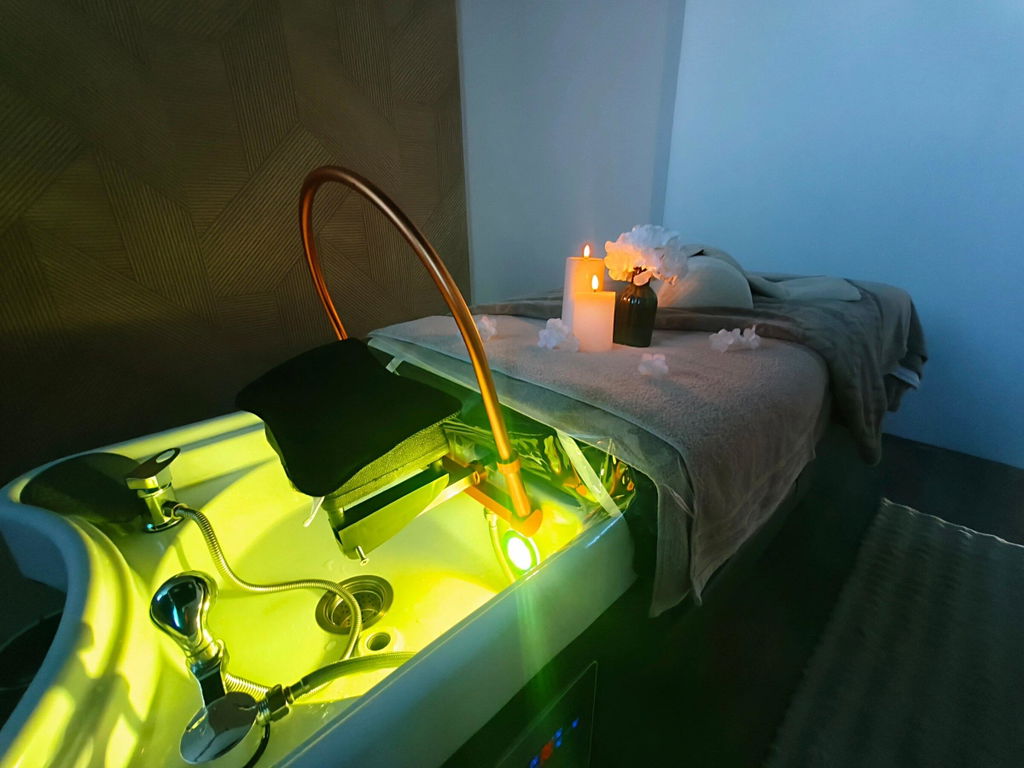
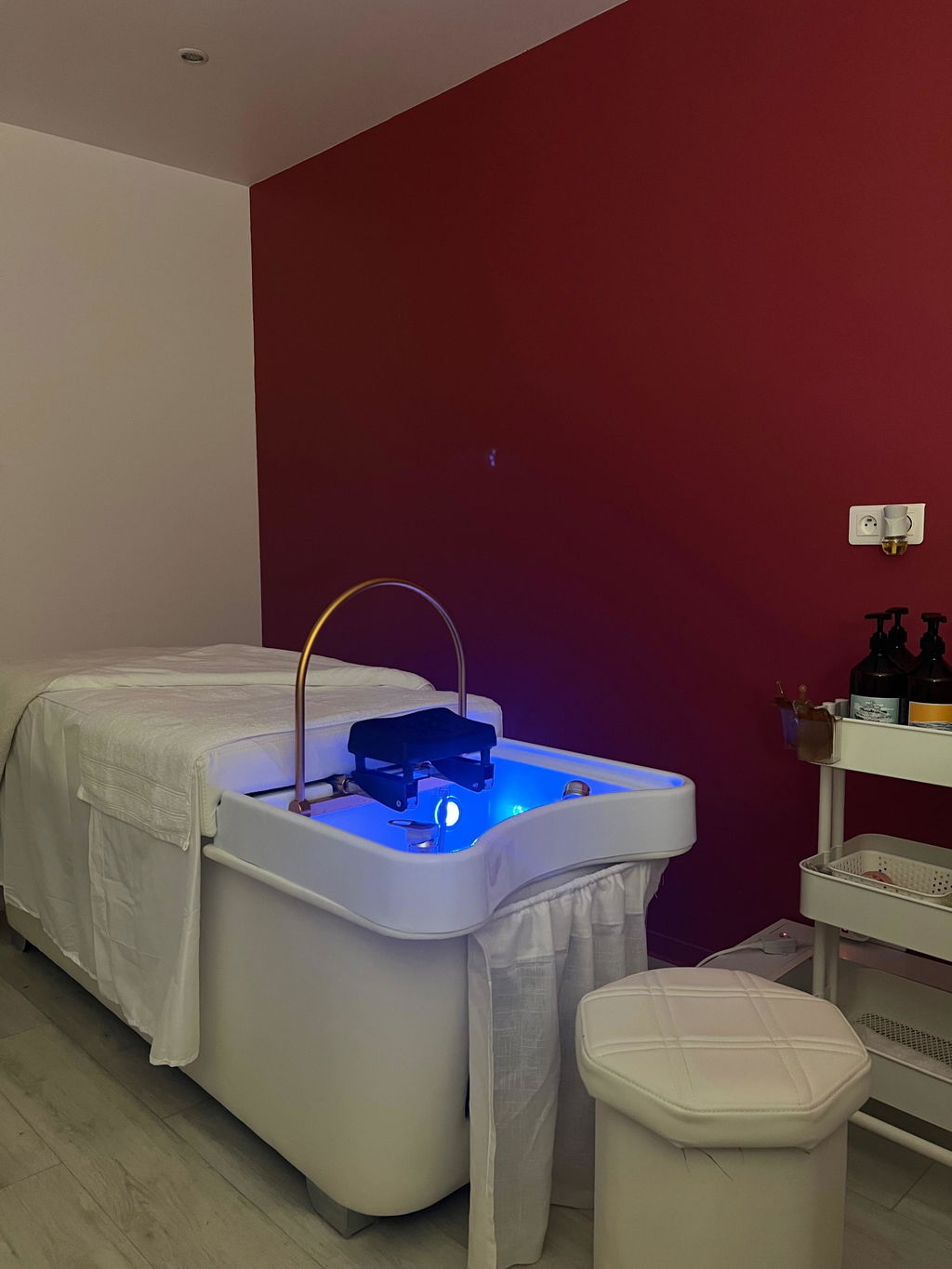
The equipment you use during the session directly contributes to the perceived value—provided it is visible, identifiable, and you know how to talk about it. A client who sees a professional head spa basin for the first time immediately understands that they are not in for an ordinary treatment. It's a strong signal, and it's only effective if you own it: name the equipment, explain its role, describe what it will bring to them.
Complementary equipment plays the same differentiating role. The Mizuki vapozone helmet, integrated mid-protocol during the mask phase, frees your hands for an additional massage while diffusing cool steam onto the scalp. For the client, it's a sensation they cannot replicate at home—and that's precisely what justifies coming back.
Communication: naming what you do
The vocabulary you use to describe your service shapes its perception even before the first session. Some practical rules:
Name the ritual, not the service
❌ "Scalp treatment with massage"
✅ "Japanese head spa ritual — diagnosis, massage, and personalized treatment"
Translate technical terms into perceived benefits
Your clients don't know what a "connected basin" or a "vapozone arch" is. What they understand: "cool steam diffused to accompany the mask application phase." Always translate technical terms into what the client feels or gains.
Zero therapeutic claims
Neither in your menus, nor on your social media, nor during the session: no promises of medical results, anti-hair loss, or curative effects. Besides the legal risk, these claims weaken your wellness positioning and expose your professional liability insurance.
What we observe in the field
Among the projects we support, the difficulty is generally not in getting a premium price accepted—it's in making its justification immediately visible. When equipment, protocol, environment, and communication are consistent, the price is better understood even before booking.
What distinguishes salons that charge premium prices
Among the professionals we support, those who maintain premium prices over time share several commonalities—regardless of their salon's size or location.
Among the professionals we support, those who are most successful at maintaining premium prices have generally undergone professional training from a specialized organization before starting. This is not a legal prerequisite, but it provides confidence in the techniques, legitimacy in the discourse, and credibility with demanding clients. They invest in clearly identifiable professional head spa equipment, which they embrace and present during sessions. They work on their communication before their prices—menu, social media, appointment booking, welcome: everything is aligned to the same level of care. And they maintain their prices: they don't offer discounts or compromise to fill an empty schedule.
Article written based on our field experience and support for over 400 professionals in France and Europe.
FAQ — Head spa and premium positioning
At what price should you launch your Japanese head spa?
There is no universal price, but a constant rule: the launch price must reflect the intended positioning from the start. Starting low to "attract the first clients" anchors the service in the ordinary category and makes price increases difficult once clients are accustomed.
Common prices observed in the French market range from €45 to €65 for an express format, €70 to €95 for a standard ritual, €100 to €150 for a premium experience, and exceed €150 for a signature protocol. These benchmarks vary depending on duration, city, products, equipment, and level of personalization. In our experience, salons that launch at a premium price and maintain a consistent level of care build loyalty faster than those that start low and try to gradually increase prices.
How do you justify a high head spa price to a client who compares?
Price comparison occurs when the client doesn't understand what differentiates your service. The answer is not to lower your price—it's to make what justifies it visible even before they ask the question.
Concretely: the training you've undertaken and the skills you've acquired are worth mentioning, your equipment is presentable and named during the session, your initial diagnosis shows that you personalize the treatment, and your structured protocol gives the client the feeling of experiencing something well-constructed. A client who understands what they are paying for no longer compares it to a neighbor's service. If comparison persists after these signals, it often means the client is not in your target audience—and that's useful information, not a problem to be solved with a discount.
Do you need high-end equipment to offer a premium head spa?
A high price is not enough to create a premium experience. You need professional, reliable, aesthetic equipment adapted to the protocol, integrated into a consistent environment, and used by a properly trained practitioner. High-end equipment alone is not enough: it must be combined with a mastered protocol, a coherent space, and a properly trained practitioner.
What makes the difference is not the price of the equipment but how it is integrated into the overall experience. Naming the equipment during the session, explaining its role, making it an element of the protocol—that's what transforms a basin into a value proposition. Complementary equipment like the vapozone helmet follows the same logic: its value lies in how it enriches the session and creates a sensation that the client cannot reproduce at home.
Can you offer a premium head spa in a small salon?
Yes—and it's often easier in a small salon than in a large establishment. Premium positioning relies on coherence and attention, two qualities that human-sized structures naturally deliver. A client who comes to a small salon knows that they are not sharing the space with twenty other people and that the practitioner is entirely available to them. That in itself is a premium signal.
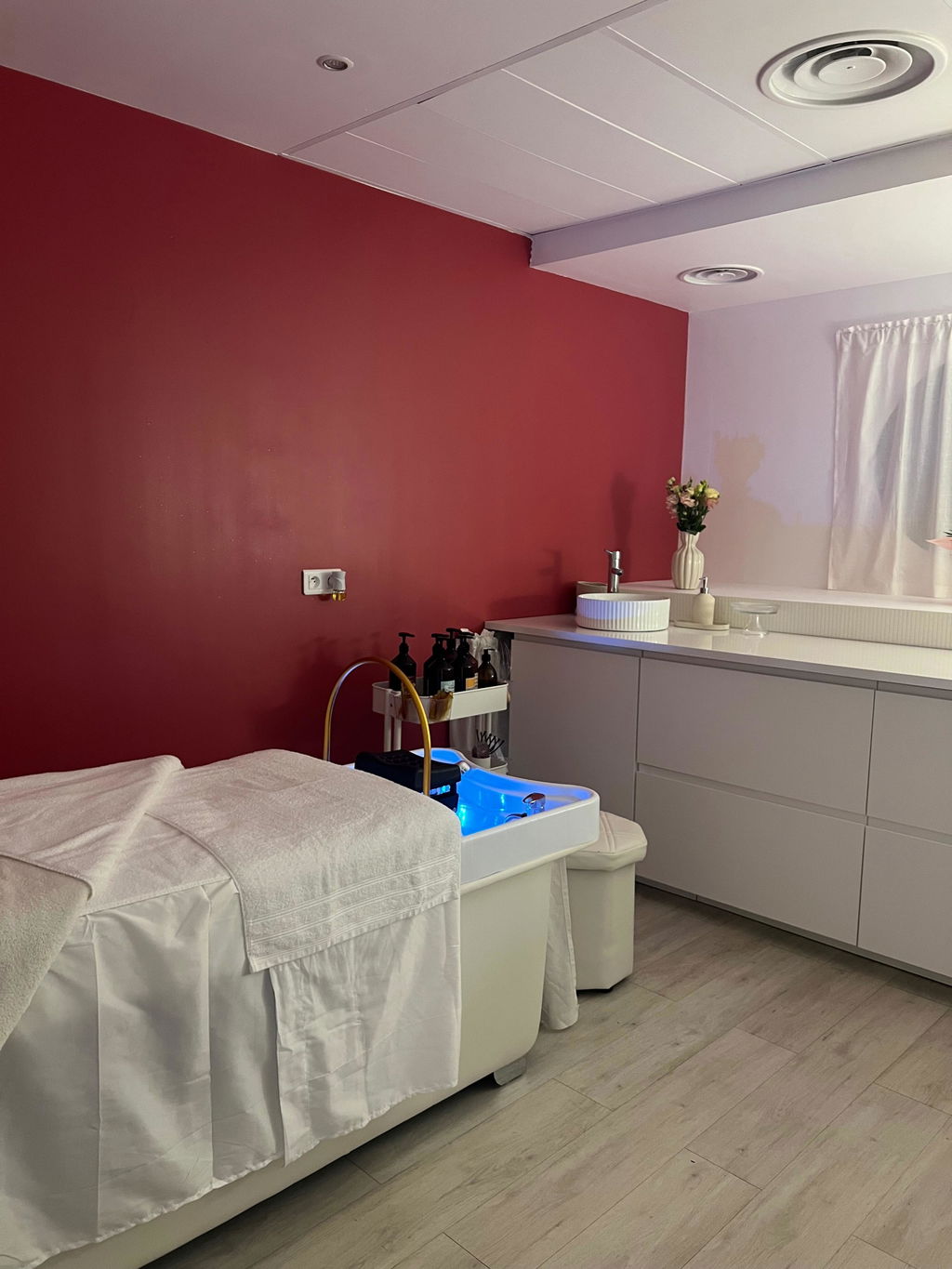
The constraint is mainly physical: clearly delimit the head spa area from the rest of the salon, even symbolically (curtain, partition, lighting change), to create the sensory break that allows the client to relax. A well-designed 6 to 8 m² space provides a more premium experience than a large impersonal room without visual identity.
How to communicate about Japanese head spa without therapeutic claims?
The rule is simple: describe what the client will experience (the sensory experience, the sensation, the protocol) rather than what the treatment will produce as a medical result. "Scalp massage with progressive pressure, cool steam, rinsing with tempered water" is factual and legal. "Stimulates regrowth," "reduces hair loss," or "treats scalp psoriasis" are therapeutic claims—they expose you to legal risk and can weaken your professional liability insurance coverage.
In practice, focus your communication on three axes: the immediate well-being felt during the session, the quality of the ritual and the experience, and the practitioner's competence (training, protocol, personalization). These three axes are sufficient to justify a premium positioning without crossing the therapeutic line.
Do you want to position your head spa as premium from the launch?
Browse our range of professional head spa equipment from Sakura or book a free discovery appointment—we will analyze your project, space, and target positioning together.