
In just a few years, the Japanese head spa has become one of the most sought-after services in the professional beauty sector in France. Behind this craze lies a concrete reality: more and more professionals – hairdressers, beauticians, wellness therapists – want to integrate this discipline into their activity or create a dedicated space. But opening a head spa, whether it's a specialized salon or a cabin within an existing structure, requires answering a certain number of practical questions before getting started.
This guide reviews the essential elements: the regulatory framework, the premises, equipment, training, pricing, and communication. The goal is not to discourage you with an exhaustive list, but to give you a clear vision of what opening a head spa in France concretely represents – so that you can move forward with the right information in hand.
The regulatory framework: what you need to know before opening
The head spa is a hybrid discipline that combines hair care and scalp massage techniques. In France, the applicable regulatory framework directly depends on your initial training and the type of care you offer.
If you are a qualified hairdresser
A CAP or BP hairdressing diploma authorizes you to perform hair care included in the head spa – shampooing, scalp treatments, head massage. You can offer head spa services in your salon without additional regulatory procedures related to the discipline itself. Training in the Japanese head spa protocol is recommended to offer a quality service, but it is not legally mandatory.
If you are a beautician or wellness practitioner
The situation is more nuanced depending on your exact profile and the treatments you wish to integrate into your protocol. Technical hair care (colorings, chemical treatments) requires a hairdressing diploma. For wellness treatments and head massages, the applicable framework depends on your status, your initial training, and the precise nature of the services offered. We recommend that you check your situation with the Chambre des Métiers et de l'Artisanat (CMA) or a lawyer specializing in beauty profession law before opening – rules evolve, and up-to-date information is better than a general interpretation.
Registering your activity
Whatever your situation, practicing a professional activity in France requires an appropriate legal structure – sole proprietorship, SASU, SARL depending on your project. The formalities for opening premises that welcome clients vary according to the nature of the activity and the size of the premises. Again, a discussion with the CMA or an accountant beforehand will save you unpleasant surprises when opening.
The premises: area, configuration, and plumbing
The premises are often the first stumbling block – and one of the most structuring for your project. Constraints vary greatly depending on whether you integrate the head spa into an existing salon or create a dedicated space.
Minimum area
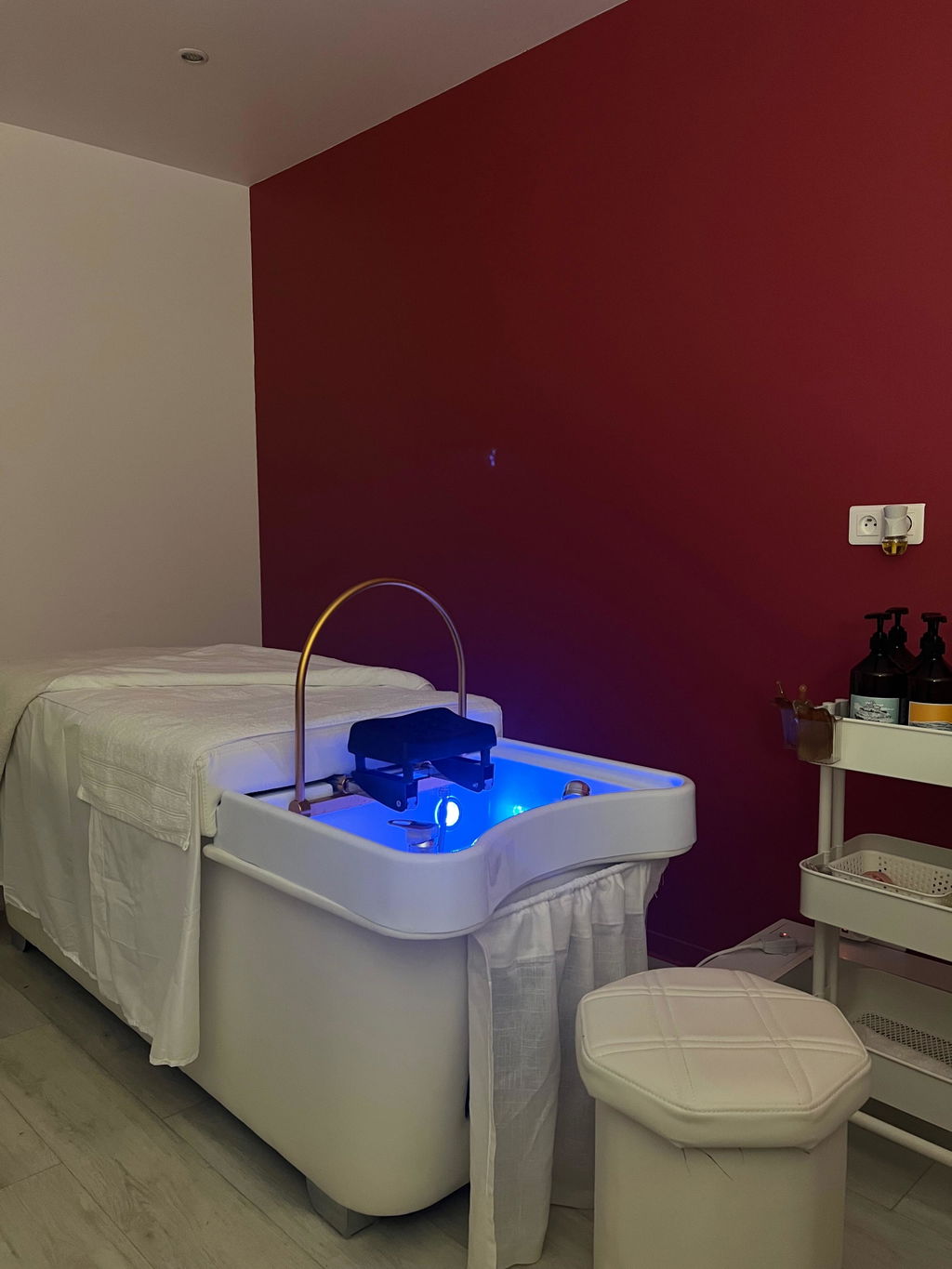
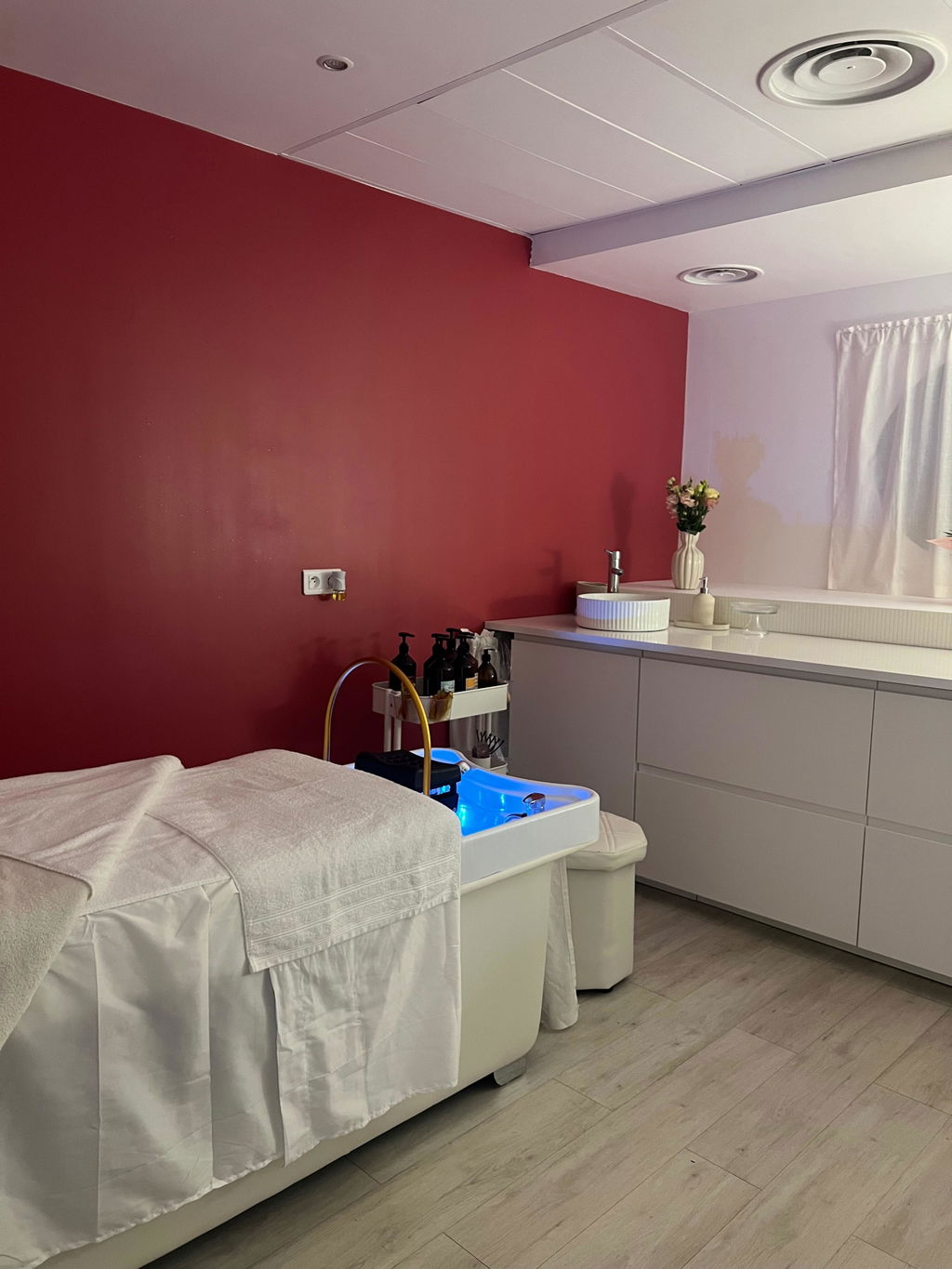
For a head spa shampoo station, allow a minimum of 6 to 8 m² dedicated, including circulation around the station and the practitioner's workspace. For a complete head spa table, plan for 8 to 12 m². If you wish to create a closed cabin – which significantly enhances the customer experience and justifies a premium positioning – an area of 12 to 15 m² is recommended.
Water connection
If you opt for equipment with plumbing (shampoo basin or table with integrated water supply and drainage), your premises must have a cold water supply and drainage near the station. If not, two options: plan for plumbing work (to be included in your installation budget), or opt for equipment without plumbing that requires no structural modifications.
Ambiance and visual identity
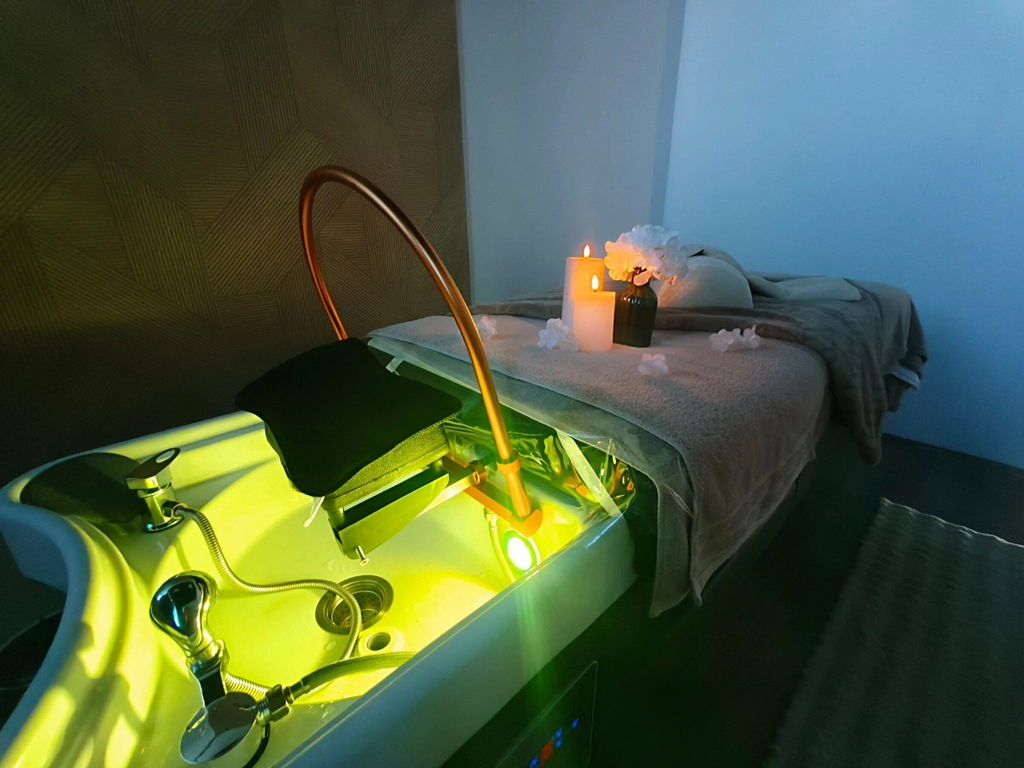
The Japanese head spa is based on a global sensory experience. The environment in which you offer the service has a direct impact on the perceived value – and therefore on the price you can charge. A well-thought-out space, even compact, with soft lighting, controlled acoustics, and a consistent visual identity, justifies significantly higher prices than a station installed in a corner of a salon without any particular arrangement.
Equipment: the essential elements
This is the central investment of your project. The choice of your equipment determines your pricing positioning, your installation constraints, and the quality of the experience you offer your clients.
Main equipment: shampoo basin or table
The market offers two main families of professional head spa equipment: shampoo basins (with or without plumbing) and integrated tables. The choice depends on your space, your budget, and your commercial positioning. To identify the model best suited to your situation, you can compare the entire Sakura range on our dedicated page.
Complementary equipment
Beyond the main equipment, several accessories contribute to the quality of the protocol and the customer experience:
- A professional steam helmet or vapozone for hair treatments under moist heat
- Professional hair care products adapted to head spa protocols (oils, masks, serums)
- Professional linen in sufficient quantity to ensure hygiene between each client
- A sound and olfactory diffusion system if you wish to work on the complete sensory experience
What to check with your head spa supplier
The choice of your head spa supplier is as important as the choice of the equipment itself. Several criteria are decisive: CE compliance of the equipment (mandatory for any professional appliance sold in Europe), availability of spare parts, responsiveness of after-sales service in French, and quality of installation support. A head spa supplier in France capable of supporting you from order to commissioning – and beyond – is a long-term partner, not just a seller.
Training: essential in practice, optional in law
As we saw in the regulation section: no specific head spa training is legally mandatory for qualified hairdressers or wellness practitioners. In practice, the situation is different.
The Japanese head spa is based on precise protocols – sequencing of gestures, pressure, duration, choice of products according to scalp type. Offering a head spa service without being trained means risking disappointing clients who have specific expectations, and missing out on the results that make the discipline's reputation.
A certified head spa training will allow you to master the fundamentals of the protocol, understand the specificities of different scalp types, and build a coherent offer. Sakura is not a training organization – we direct professionals who wish to train to certified Qualiopi training partners, whose pedagogical quality is recognized.
Pricing: how to position your offer
Head spa pricing in France varies greatly depending on positioning, equipment, and location. Generally, three levels are observed:
Entry-level positioning — €45 to €65
Express treatment of 30 to 45 minutes, on a non-plumbed shampoo basin, in a classic hair salon. The service is simple, the protocol short, the clientele often existing. This is an effective entry point to test demand without major investment.
Mid-range positioning — €65 to €95
60-minute session with a structured protocol, plumbed shampoo basin or table, in a semi-dedicated space. This is the most common positioning for salons that make the head spa a primary service in their offer.
Premium positioning — €95 to €130
75 to 90-minute session, integrated head spa table, dedicated cabin with refined visual identity, high-end hair care. This positioning is accessible as long as the environment, equipment, and mastery of the protocol meet the expectations it generates.
Whatever your initial positioning, plan a price list that includes options – treatment alone, treatment with premium products, a course of several sessions – to maximize the average basket and customer loyalty.
Communication: how to attract your first clients
Opening a head spa naturally generates curiosity – it's a service many clients have heard of but few have tried. Capitalize on this curiosity from the start.
Word-of-mouth and existing clients
If you are integrating the head spa into an existing salon, your current clients are your primary audience. Present the new service during consultations, offer discounted discovery sessions at launch, and encourage reviews on Google and social media. A client satisfied with their first head spa experience talks about it – it's a discipline that spreads well by recommendation.
Social media
The head spa is visually strong – rituals, gestures, products, the ambiance of the station – and naturally generates engaging content on Instagram and TikTok. Short protocol videos, before/after on scalp condition, client testimonials: all formats that work without a significant advertising budget.
Local SEO
An up-to-date Google Business Profile, with photos of your space and services, is essential. Searches for "head spa [city]" generate qualified local traffic that you can capture from opening. Also remember to list your service on online booking platforms adapted to your sector.
The most common mistakes when opening a head spa
After having supported several hundred salons, institutes, and spas in their head spa projects, we observe the same mistakes recurring regularly. Here they are, so you can anticipate them.
Underestimating the space needed. A head spa station takes up more space than it seems – especially because the practitioner must be able to move freely around the reclining client. Dozens of salons have installed their equipment in too confined a space, making work uncomfortable and the protocol difficult to execute correctly. Measure your space before ordering.
Choosing material based solely on price. Low-cost equipment without French after-sales service, without available spare parts, and without documented CE compliance may seem economical to purchase. It becomes costly from the first breakdown – and risky from a regulatory perspective. The total cost of ownership over 3 to 5 years is the right indicator, not the purchase price alone.
Neglecting training before opening. Offering a head spa service without mastering the protocol means risking disappointment from the first sessions – and negative word-of-mouth is difficult to erase. Training is an investment that directly determines the quality of your beginnings.
Setting too low a price at launch. For fear of not finding clients, many professionals underprice their service at the start. This is a difficult mistake to correct – raising prices for an existing clientele is always delicate. It is better to start at the right level with fewer clients, and gradually increase volume.
Not anticipating the replenishment of consumables. Linens, hair products, treatments: consumables represent a recurring cost to be integrated into your economic model from the start. Several salons have been caught off guard by underestimating these items in their monthly operating budget.
FAQ - Opening a head spa
Do you need a specific diploma to open a head spa in France?
No, there is no specific "head spa" diploma recognized by the state in France. Qualified hairdressers (CAP, BP hairdressing) can offer hair care and head massages without additional steps. Wellness practitioners can perform head massages in a wellness setting without particular regulatory constraints. Training in the Japanese head spa protocol is highly recommended for the quality of the service, but it is not legally mandatory.
What budget should be planned for opening a head spa?
The budget for opening a head spa varies considerably depending on the ambition level of the project. For integration into an existing salon with a non-plumbed shampoo basin, investments in equipment, training, linen, and starter products generally range between €1,500 and €3,000. For a dedicated space with a plumbed table, cabin fitting, and complementary equipment, expect between €5,000 and €15,000 depending on the models chosen and the condition of the premises. We have detailed these ranges in our guide dedicated to the budget for opening a head spa.
Can you open a head spa without dedicated premises?
Yes. The majority of professionals start by integrating the head spa into their existing space – a hair salon, a beauty institute, a wellness practice. A non-plumbed shampoo basin can be installed in almost any configuration without major work. Dedicated premises become relevant when you want to develop a primary head spa activity with a premium positioning and several sessions per day.
How long does it take to make a head spa profitable?
The time to profitability depends on your initial investment, your pricing, and your session volume. For entry-level equipment with a positioning of €50-60 per session, a few sessions per week are enough to cover the investment in a few months. For a more ambitious project with a premium table and full fit-out, profitability generally takes between 6 and 18 months depending on the activity generated. Active communication from opening is the most determining factor to accelerate this timeline.
How to choose your head spa equipment supplier in France?
The essential criteria are the CE compliance of the equipment, the availability of after-sales service in French, responsiveness in case of breakdown, and the quality of installation support. A head spa supplier based in France or with responsive French-speaking support is a concrete daily advantage. Beware of equipment without technical documentation in French and without a clear warranty – the initial purchase price does not always reflect the total cost of ownership over time.
To review your project and identify the equipment best suited to your situation, make an appointment with our team – we will analyze your space, your positioning, and your objectives to advise you on the best available options.